
Blog
Technical notes on peptide specification, sourcing, quality control and scale-up — written for buyers and formulation teams.
Notes from the lab and the supply desk
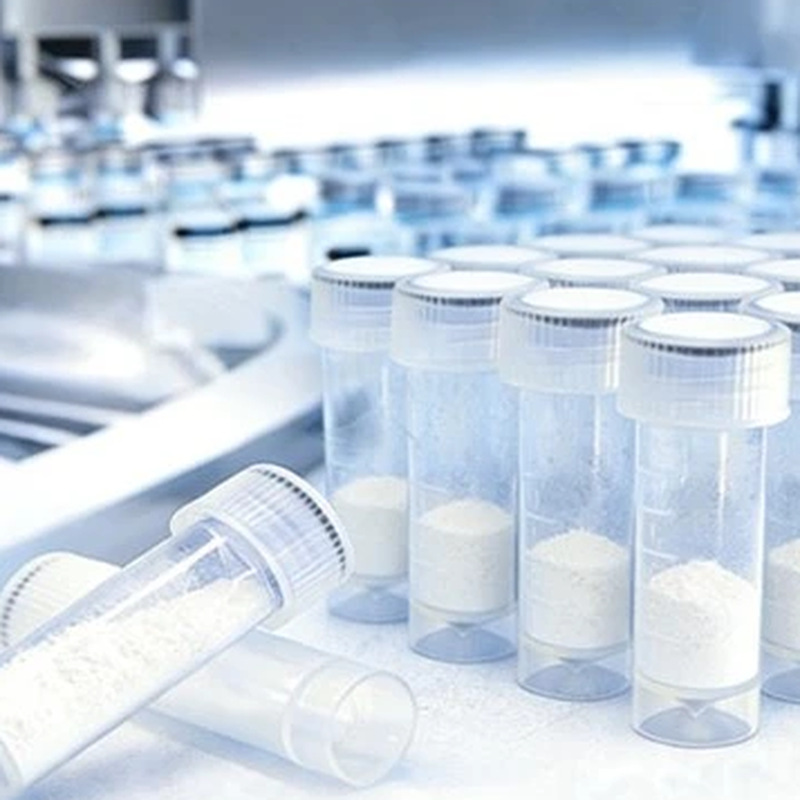
What Are Cosmetic Peptides? A Buyer's Guide to Peptide Ingredients
Cosmetic peptides are short amino-acid chains supplied as raw materials for leave-on and rinse-off formulations. For a buyer, the useful definition is a set of checkable fields: sequence identity, assay method, physical form, solubility behaviour and the batch document set that records them.
Read More
How to Qualify a Peptide Supplier: 9 Checks Before the First Purchase Order
Qualifying a peptide supplier is mostly a documentation and method exercise, not a price exercise. Nine checks cover specification and analytical method, batch traceability and document availability, and whether the grade you approve as a sample can be reproduced at production volume.
Read More
GHK vs GHK-Cu: What the Blue Colour Tells a Formulation Buyer
GHK is the free Gly-His-Lys tripeptide; GHK-Cu is its copper complex. They have different registry numbers, different appearance and different formulation constraints. The blue colour is evidence of a copper complex, but it is not a purity result and not proof of identity.
Read More
COA vs TDS vs MSDS: Which Peptide Document Do You Actually Need?
A COA reports results for one released batch. A TDS describes how the grade is intended to behave and be handled. An MSDS covers safety, transport and regulatory information. Confusing the three is a common reason a shipment stalls at QA release.
Read More
Custom Peptide Synthesis: What to Put in a Request for Quotation
A custom peptide quotation is only as comparable as the brief behind it. Sequence, modifications, quantity, purity window and method, identity and impurity requirements, document list, pack format and destination together determine both price and lead time.
Read MorePeptide Samples, MOQ and Pack Sizes: How They Change a Quotation
Sample size, minimum order quantity and pack format are not commercial footnotes. They change weighing accuracy, handling loss, packaging cost and the number of batches a supplier must release, which is why an apparently small parameter change can move a quote noticeably.
Read MorePeptide Powder Storage: What Actually Degrades a Lyophilised Powder?
For a lyophilised peptide powder, the main risks are moisture uptake, light exposure, repeated temperature cycling and time in solution after reconstitution. A shelf-life statement only holds under the storage conditions and in the unopened pack it was established for.
Read MoreWhy Do Peptide Quotes Differ So Much? Six Variables to Compare
Peptide quotations diverge because sequence length, purity method, specification window, quantity and pack format, document scope and lead time are rarely held constant. Align those six variables first; a price comparison made before that is comparing different products.
Read More98% vs 99% Peptide Purity: What a COA Actually Commits a Supplier To
Two suppliers can both quote 99%. Here are five specification fields and one worked calculation that make their quotations comparable - without inventing any COA data.
Read MoreGHK-Cu or Acetyl Hexapeptide-8? How to Choose for a Transparent Serum
A dosage arithmetic example, colour and chelator constraints, and the sample-stage checks that decide which peptide survives a clear formulation.
Read MoreFrom a 100 mg Screen to a 1 kg Order: What Changes in a Peptide Quote
Stepwise yield arithmetic, three questions to settle at the sample stage, and the document set a repeat supply agreement should lock.
Read MorePeptide premixes: when a blend beats a single active
How pre-dispersed complexes shorten development time and reduce handling error in production.
Read MoreDocumentation checklist for importing cosmetic peptide ingredients
COA, MSDS, TDS, third-party reports and certificate copies: what buyers usually need at customs and QA release.
Read MoreStability and solubility testing for peptide actives in real formulas
Why a spec sheet alone is not enough, and which compatibility checks prevent reformulation later.
Read MoreWhat Is GHK-Cu (Copper Tripeptide-1) and Which Identifiers Should a Buyer Verify?
GHK-Cu is the copper complex of the tripeptide Gly-His-Lys, registered as CAS 89030-95-5 with formula C14H21CuN6O4 and molecular weight 400.91. Verify the registry number, the copper complex and the analytical method before comparing quotations.
Read MoreGHK-Cu vs GHK: Which One Should You Specify for a Cosmetic Formula?
Specify the substance you intend to buy by its registry number, not by a shared short name. GHK-Cu is CAS 89030-95-5 (C14H21CuN6O4, 400.91, blue powder); free GHK is CAS 49557-75-7. The two are not interchangeable in a specification.
Read MoreHow Do You Read a Peptide COA Before Approving a Batch?
Read the method before the result. A peptide COA is only useful when each reported value is tied to an agreed analytical method, a stated calculation basis and the correct registry number; the binding limits are those on the signed batch COA.
Read MoreWhat Should a Buyer Confirm When Specifying Acetyl Hexapeptide-8?
Confirm CAS 616204-22-9, formula C34H60N14O12S, molecular weight 889 and the INCI name Acetyl Hexapeptide-8, then agree the assay method and the calculation basis before a sample ships. Commercial values are stated per order.
Read MoreHow Do You Audit a Peptide Supplier Before Placing a Bulk Order?
Audit the documents, the method and the arithmetic before the price. Nine checks and six quote variables let you compare suppliers field by field; the binding limits are those on the signed batch COA agreed before sampling.
Read MoreReady to evaluate a sample?
Send us your target specification, volume and destination — we'll reply with COA, lead time and a quotation.